

What is HJT Solar Panel
HJT Solar Panel is a type of solar panel that is made using Hybrid-Junction Technology (HJT). It is a combination of traditional silicon solar cells and thin-film solar cells, which enables it to have higher efficiency and better performance in low light conditions compared to traditional solar panels. HJT solar panels are also known for their durability and longevity, making them a popular choice for residential and commercial solar projects.
Benefits of HJT Solar Panel
High efficiency
The HJT solar panel has a high efficiency rate of up to 23%, which means it can convert more sunlight into electricity compared to other solar panels.
Reliable performance
HJT solar panels are known for their reliable performance even in low light conditions. This means you can still generate electricity on cloudy days or in shaded areas.
Long lifespan
HJT solar panels are designed to last for years, thanks to their durable materials and high-quality components.
Energy savings
When you install HJT solar panels in your home or business, you can save money on your electricity bills by generating your own renewable energy.
Low maintenance
HJT solar panels require minimal maintenance, which means less hassle and cost over time.
Environmentally friendly
Unlike fossil fuels, HJT solar panels don't generate harmful emissions or pollutants, making them a clean and sustainable source of energy.
-
![High Efficiency HIT/HJT/HCT/HDT Solar Module, Bifacial Energy Boost 20%, 325W to 330W 60-cell, Double-Glass Photovoltaic Solar Panel]() High Efficiency HIT/HJT/HCT/HDT Solar Module, Bifacial En...Technical Data High-Performance Bifacial technology generates power from both the front and back faces of the module, resulting in up to 20% higher energy harvest (kWh). Our HIT/HJT/HCT cellsread more
High Efficiency HIT/HJT/HCT/HDT Solar Module, Bifacial En...Technical Data High-Performance Bifacial technology generates power from both the front and back faces of the module, resulting in up to 20% higher energy harvest (kWh). Our HIT/HJT/HCT cellsread more -
![High Efficiency HIT/HJT/HCT/HDT Solar Module, 21%, 400W to 410W Solar Module China Factory Supplier]() High Efficiency HIT/HJT/HCT/HDT Solar Module, 21%, 400W t...HIT/HJT modules use our patented Hybrid Cell Technology platform that utilizes enabling thin-film materials on surface engineered Silicon substrate to achieve high-efficiency power output andread more
High Efficiency HIT/HJT/HCT/HDT Solar Module, 21%, 400W t...HIT/HJT modules use our patented Hybrid Cell Technology platform that utilizes enabling thin-film materials on surface engineered Silicon substrate to achieve high-efficiency power output andread more -
![Poly Solar Module 325W to 345W 72 Cells for Solar Power System]() Poly Solar Module 325W to 345W 72 Cells for Solar Power S...We provide world-class crystalline silicon photovoltaic modules • Unrivaled manufacturing capacity and world-class technology • Rigorous quality control meeting the highest international standards:read more
Poly Solar Module 325W to 345W 72 Cells for Solar Power S...We provide world-class crystalline silicon photovoltaic modules • Unrivaled manufacturing capacity and world-class technology • Rigorous quality control meeting the highest international standards:read more -
![Poly Solar Panel 270W to 290W 60 Cells for Solar System from China Factory]() Poly Solar Panel 270W to 290W 60 Cells for Solar System f...We provide PID Free module under the condition of 85℃ / 85% RH. It can be used for all applications, especially ideal for installations in regions of high temperature and high humidity. It sets a newread more
Poly Solar Panel 270W to 290W 60 Cells for Solar System f...We provide PID Free module under the condition of 85℃ / 85% RH. It can be used for all applications, especially ideal for installations in regions of high temperature and high humidity. It sets a newread more


Why Choose Us
Customer Service
We earn your respect by delivering on time and on budget. We built our reputation on exceptional customer service. Discover the difference it makes.
Expertise and Experience
Our team of experts have years of experience in delivering high quality services to our clients. We hire only the best professionals who have a proven track record of delivering exceptional results.
One-stop service
We promise to provide you with the fastest reply, the best price, the best quality, and the most complete after-sales service.
Competitive Pricing
We offer competitive pricing for our services without compromising on quality. Our prices are transparent, and we do not believe in hidden charges or fees.

Heterojunction solar panels work similarly to other PV modules, under the photovoltaic effect, with the main difference that this technology uses three layers of absorbing materials combining thin-film and traditional photovoltaic technologies. The process involves connecting the load to the terminals of the module, with the photons being converted into electricity and generating an electric current, flowing through the load
To generate electricity, a photon impacts the P-N junction absorber and excites an electron, causing it to move to the conduction band and creating an electron-hole (e-h) pair.
The excited electron is collected by the terminal connected to the P-doped layer, creating the electricity that flows through the load.
After flowing through the load, the electron flows back to the rear contact of the cell and recombines with a hole, ending that particular e-h pair. This is constantly happening as the modules generate electricity.
A phenomenon called surface recombination occurs in standard c-Si PV modules, which limits their efficiency. During this process, an excited electron pairs with a hole at the surface of the material, causing them to recombine without the electron being collected and flowing as an electric current.
To reduce surface recombination, HJT cells separate the highly recombinative-active (ohmic) contacts from the wafer-based layer using a passivating semiconductor film with a wider bandgap layer made out of a-Si:H. This buffer layer makes the charge trickle slow enough to create a high voltage, but fast enough to avoid recombination before electrons are collected, increasing the efficiency for the HJT cell.
During the light-absorbing process, all of the three semiconductor layers will be absorbing photons and converting them into electricity.
The first photons arriving will be absorbed by the exterior a-Si:H layer, converting them into electricity. The majority of the photons, however, are converted by the c-Si layer, which has the highest solar conversion efficiency among the materials in the cell. The remaining photons are finally converted by the a-Si:H layer at the rear side of the module. This three-step process is the reason why monofacial HJT solar cells have achieved solar efficiencies of up to 26.7%.
Why choose solar panels with HJT technology
The PN junction in PERC technology is made of crystalline silicon, which is a type of homojunction cell. HJT solar panels is different from traditional PERC technology crystalline silicon solar cells. HJT is a junction made up of two different semiconductor materials.
The way it works is similar to regular solar cells, but the HJT cell has a thin layer of amorphous silicon that helps it convert sunlight into electricity more efficiently.Right now, many PV manufacturers have an average PERC efficiency of over 22%, and the average efficiency of HJT cells is up to 25%.
Besides that, HJT solar cells are designed to have more than 93% module bifaciality, meaning they can generate electricity from both sides of the module.
Thin-film solar energy using HJT solar panels has a lower temperature coefficient compared to regular crystalline silicon cells. HJT solar panels can generate power with an efficiency of over 23% at temperatures below 200 °C.
Additionally, they have a low temperature coefficient of -0.2%/K, which helps improve the cost-effectiveness and power output of photovoltaic systems.
This means that HJT solar panels can work well even in hot temperatures, allowing them to produce more energy in hot climates. This makes it possible to use these high-performance cells for large-scale power generation.
In comparison to conventional solar panels produced using PERC technology, those produced using HJT solar panels have a reduced number of process stages, which results in an easier flow of production. The production of solar photovoltaic modules using HJT solar panels requires only 8 processes, compared to the approximately 13 required by PERC technology. As a result, it is becoming more financially feasible, which is encouraging for the future of solar energy, as the cost of the necessary equipment continues to decrease.
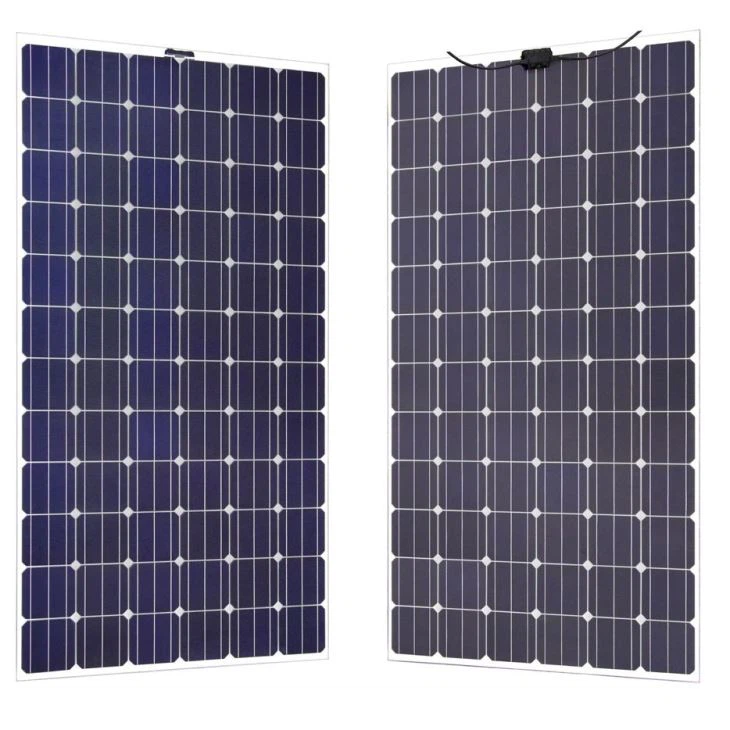
An individual solar cell is made up of extremely thin materials that are arranged so they can capture as much sunlight energy as possible that hit their surfaces. Of course, not all of the light that hits the cell's surface is absorbed. Some is reflected or actually passes right through the cell.
Heterojunction solar cell use a three-layer process to catch as much sunlight energy as possible. The silicon wafer in the middle of the “sandwich”, does the most of the sunlight to electricity conversion.
The top layer of Amorphous silicon that catches some sunlight before it meets the crystalline layer, is the first tier or “net”. The second as we mentioned earlier, is the middle wafer and then there is the bottom or third-tier of Amorphous silicon that further enhances the cell's ability to grab many photons that would otherwise pass through the cell completely or bounce right out of it. This is a simple, yet unique method to increase efficiency without adding much cost.
So, by creating a solar panel from three layers of different silicon, means the resulting HJT equipped panel can reach high efficiencies of over 21%, when compared to other panels using a conventional technical approach.
Solar panel modules come in a variety of 'designs'. The untrained eyes may be befooled into thinking that they are for style, but for what they truly are, the variations in designs are often a matter of the technology used in their manufacture of the panels than of mere aesthetics. New trends and innovation in the solar module industry quickly follow the latest ones in rapid succession, often times displacing them. The reason being that manufacturers are constantly pushing back the limits of efficiency of their module offerings. In fact, all the top manufacturers have ceased offering panels manufactured from the traditional technologies. There is significant competition between manufacturers, especially the premium brands, in this respect. The efficiency of a solar panel is how well it performs its function of converting sunlight into electricity. The latest solar panel technologies - or designs -, though expectedly far more expensive, come with the highest efficiency ratings.
The traditional technology used in the manufacture are the polycrystalline and monocrystalline technologies. Between the two, monocrystalline is the superior cell technology. Monocrystalline cells are more efficient because they are cut from a single pure crystal ingot. However, because they cost more to manufacture, polycrystalline panels became more popular even though they are inferior to their monocrystalline counterpart. With the drop in manufacturing costs, many manufacturers now use the monocrystalline technology. In fact, even though poly cells are still widely used and very reliable, the top brands have altogether stopped issuing polycrystalline panels and many mid-grade manufacturers are following suit.
By and large, these new solar cell technologies are upgrades on the traditional monocrystalline module technologies. They are listed below in ascending order of efficiency:
PERC - Passivated Emitter Rear Cell
Bifacial Cells
Multi Busbar Cells
Cut Cells
Shingled Cells
Dual Glass Panels - Frameless Double Glass
HJT - Heterojunction Cells
IBC - Interdigitated Back Contact Cells

Material of HJT Solar Panel
Heterojunction solar cell technology (HJT) has revolutionized the way we think about solar energy. Unlike TOPCon, which uses a single material for its solar cells, HJT cells are made from two different materials, crystalline silicon and amorphous thin-film silicon, combining the best of two worlds.
Application of HJT Solar Panel
Residential Solar Energy Systems
HJT solar panels can be used to generate electricity in residential buildings. They are designed to withstand extreme weather conditions and have a high conversion efficiency rate, making them ideal for use in residential solar systems.
01
Commercial Solar Energy Systems
HJT solar panels are also suitable for commercial buildings. Their high conversion rate ensures that they generate enough power to meet the energy needs of a commercial building. They can be integrated into the building's architecture and provide a cost-effective and eco-friendly source of energy.
02
Agriculture and Farming
HJT solar panels can also be used in agriculture and farming. They can be used to power water pumps, irrigation systems, and other farm equipment, reducing dependence on non-renewable sources of energy.
03
Portable Solar Chargers
HJT solar panels can be used to create portable solar chargers for mobile devices such as smartphones and tablets. They are lightweight and compact, making them easy to carry around and use in outdoor settings.
04
Remote Power Generation
HJT solar panels are useful in areas where the power grid is inaccessible, such as remote villages and campsites. They can be used to generate power for lighting, cooking, and other basic needs. This makes them ideal for disaster relief efforts as well.
05
Components of HJT Solar Panel
Solar Cells: The solar panels contain small units called solar cells that are responsible for converting sunlight into electrical energy. These cells are made of semiconductor materials such as silicon, and they work by absorbing photons from the sun's rays.
Encapsulant: The encapsulant is a layer of material that covers the solar cells and protects them from damage caused by exposure to the elements. It is typically made of ethylene vinyl acetate (EVA) or a similar material.
Backsheet: The backsheet is a layer of material that protects the back of the solar panel from moisture and damage. It is typically made of a polymer such as polyethylene terephthalate (PET).
Frame: The frame is the outermost part of the solar panel, and it provides support and protection for the other components. It is typically made of aluminum or another lightweight and durable material.
Junction Box: The junction box is where the wires from the solar panel connect to the inverter and other components of the solar power system. It contains diodes and other components that regulate the flow of electrical current.
Tempered Glass: The solar cells are covered by a layer of tempered glass that protects them from damage and helps to focus the sunlight onto the cells. The glass is designed to be durable and resistant to cracking or breaking.
Contact Grid: The contact grid is a series of thin wires that are attached to the solar cells and provide a pathway for the electrical current to flow. They are typically made of silver or another conductive metal.
Dirt, debris, dust and other items can dirty solar panels and if the accumulation grows too much, it can start to impact the amount of energy that the solar panels produce. Be sure to turn your solar power system off prior to cleaning. Cleaning solar panels by spraying them down with lukewarm water from a hose usually does the trick. Do not use cleaning agents or soap to clean solar panels because they can leave streaks and damage the panels.
For solar panels with heavier deposits, spraying them down with a lukewarm water from a garden hose and wiping them down with a non-abrasive, microfiber cloth can get them clean. If you clean them while on a roof, remember to do so safely by using a safety harness to prevent falls. If cleaning from a ladder, use caution to prevent falls. Best yet, a telescopic pole with a microfiber cloth attached to it can help you safely clean solar panels from the ground.
TIP: Do not clean your solar panels on a sunny day because it can leave smudges since the water can evaporate quickly.
Cleaning Solar Panels in Winter
Sometimes snow and ice can accumulate on solar panels but since they're angled, it usually melts and slides off. Should snow or ice persist, spraying panels with lukewarm water can help remove it.
Avoid using hot water to clean snow and ice from solar panels because the temperature discrepancy can cause the panels to crack. You can also brush the panels off with something non-abrasive to prevent scratches.
How Often Should Your Solar Panels Be Maintained
Solar panels only need maintenance two to four times a year, but check your solar companies manual for panel specific maintenance care. Fall and spring serve as good times to perform maintenance work because panels can need cleaning following winter where dust and debris can accumulate. Fall is also a good time because of the falling leaves and other droppings. Beware of other issues like sap from trees and bird droppings.
Checking your solar panels four times a year can help you track the performance of your panels better. You can notice issues sooner and address them faster. You should also inspect wires and connections to ensure they're in working condition. Sometimes critters can gnaw on them without you noticing.
Our Factory
Being a qualified PV company in today's globalizing world means operating in a way that reflects our values and connecting our business decisions to society's needs. Our business makes a valuable contribution to society. We know that the development, manufacture, and sale of our PV panels and kits affect society and human lives. Therefore, we aim to be open and transparent about how we operate. Shinson is committed to the corporate responsibility that comes with being in our industry, and we have taken a special interest in addressing the needs of the world. we are fully committed to the global.

FAQ
Q: What is HJT Solar Panel technology?
Q: What is the efficiency of HJT Solar Panels?
Q: Are HJT Solar Panels cost-effective?
Q: What is the lifespan of HJT Solar Panels?
Q: How do HJT Solar Panels perform in various weather conditions?
Q: Does HJT Solar Panel technology require specific types of inverters?
Q: What is the installation process for HJT Solar Panels?
Q: Do HJT Solar Panels require maintenance?
Q: Are HJT Solar Panels suitable for residential use?
Q: What is the environmental impact of HJT Solar Panels?
Q: Can HJT Solar Panels be used for off-grid systems?
Q: Are HJT Solar Panels portable?
Q: What are the benefits of HJT Solar Panels over other solar technologies?
Q: Are HJT Solar Panels more expensive than other types of solar panels?
Q: Do HJT Solar Panels require any special permits or regulations?
Q: Can HJT Solar Panels be installed on any type of roof?
Q: How do HJT Solar Panels compare to other renewable energy sources like wind turbines?
Q: How do HJT Solar Panels affect a home's property value?
Q: Can HJT Solar Panels be used in commercial applications?
Q: How can I get started with installing HJT Solar Panels?
We're professional hjt solar panel manufacturers and suppliers in China. We warmly welcome you to wholesale high quality hjt solar panel for sale here from our factory. For price consultation, contact us.
Poly Solar Module 325W to 345W 72 Cells for Solar Power System, HJT Solar Panel, Poly Solar Panel 270W to 290W 60 Cells for Solar System